
6 min readPanoramic Berkeley
Summer storage in Berkeley for Cal students
Where Cal students actually store between May and August. Unit sizes, real prices, pickup services, and what to ship home instead.
Every May a wave of Cal students walks into leasing offices two weeks before finals and asks the same question: where do I put my stuff for the summer? The answer depends on how much stuff, how much time, and whether you need any of it back before September.
Families who plan this in April spend about half what families who plan it during finals week spend. That's the whole thing, in one sentence. What follows is the how.
Why prices spike in May
Berkeley storage rates track the academic calendar. They sit near the market floor in November and December, drift up through the spring, and peak in mid-May when Cal graduation, end-of-lease season, and the general Bay Area moving season all land on the same weekend. Availability tightens fastest at the facilities closest to campus: Extra Space Storage on Cedar Street and the Public Storage on Kentucky in Berkeley proper. Oakland, Emeryville, and Richmond stay easier to book, but you have to drive.
The calendar is the biggest lever. Book by the first week of April and you get near-January rates. Book after May 1 and you pay peak. First-month discounts (half off, or the first month free) exist at almost every chain, and they get pulled from the market first when demand rises.
How much space you need
Renters overshoot on size more than any other decision. The two sizes that fit almost every Cal student are the 5x5 and the 5x10. Bigger than that, you're storing furniture, and once furniture enters the picture the math changes.
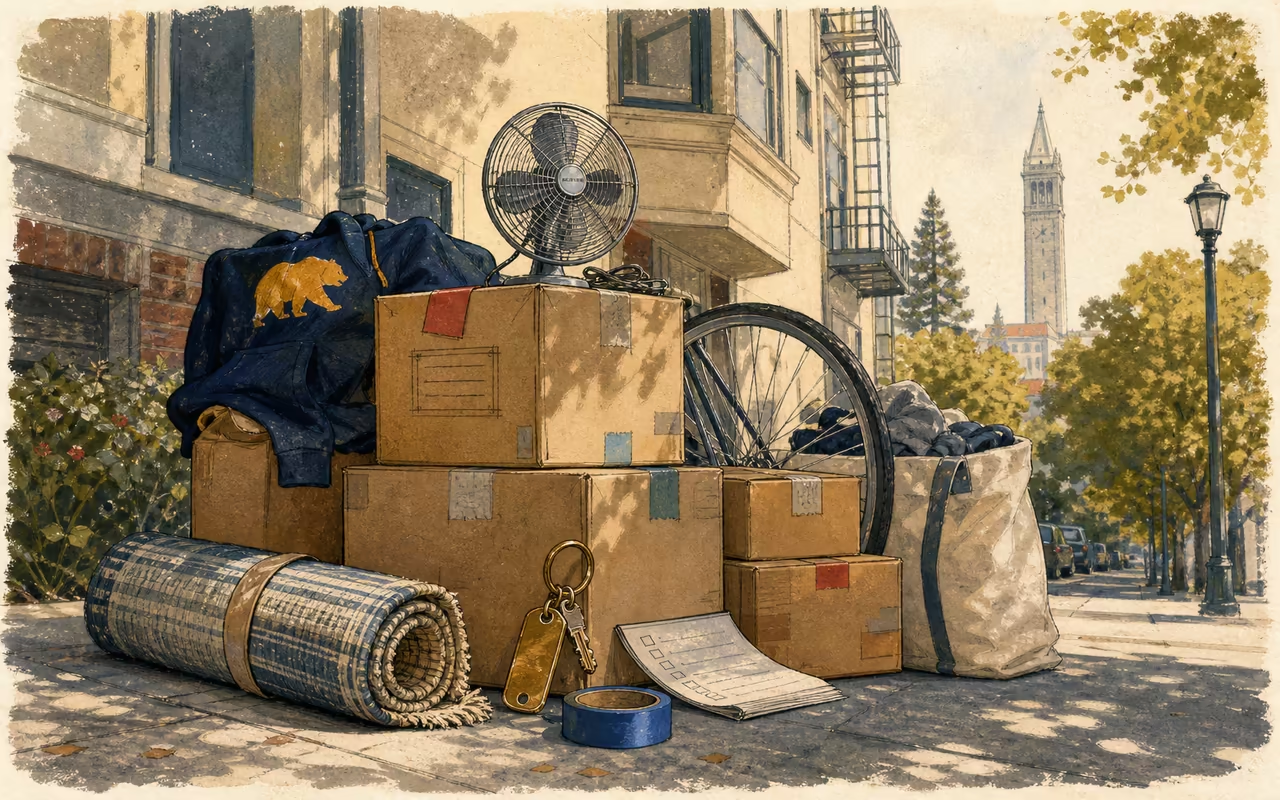
A 5x5 holds two or three months of a Cal student's stuff, minus furniture. Think a bike, four to six taped boxes, a fan, a small rug, a hanging clothes bag, a monitor in the original box. Roughly the trunk of a mid-size sedan packed carefully. Berkeley 5x5 units averaged $144 a month in May 2026, with introductory deals starting around $28 to $50 for the first month.
A 5x10 holds the same set plus a twin or full mattress standing on end, a desk chair, a small dresser, and a couple of larger duffels. Berkeley 5x10 units averaged $139 a month, and climate-controlled units started around $127. Yes, the 5x10 sometimes lists cheaper than the 5x5. The 5x5 sells out first.
Anything bigger and you're storing a couch. At that point, sell the couch for $75 on Facebook Marketplace and re-buy in September for $100. Almost always the right move.
The four ways students actually store
Self-storage with drop-off is what everyone thinks of first. Rent a unit at Extra Space, Public Storage, or CubeSmart, borrow a friend's car or rent a U-Haul cargo van for three hours, stack your boxes yourself. Cheapest per cubic foot. Most work. Best if you have a car, or one strong friend with one.
Pickup services take the driving out. Storage Scholars, Dorm Room Movers, Collegeboxes (a U-Haul division), and Clutter all serve UC Berkeley and schedule pickup and delivery around the Cal academic calendar. Continuing undergraduates for 2026-27 move in on August 23, and the pickup services time everything to that date. The premium over self-storage runs 30 to 60 percent for the same footprint. In exchange, you skip the truck rental and about six hours of your life.
Ship-and-store hybrids like Ship2Storage let you box up your stuff, ship it via UPS or FedEx to a warehouse, and have it delivered to your fall apartment. Useful when you're flying home and can't drive anything to a storage unit. Priced per box, not per cubic foot.
Peer storage on a neighbor's driveway or garage is the fourth option. Cheap or free, but the coordination is on you, and nobody's homeowner's insurance covers it.
Pickup versus drop-off, honestly
If you're already renting a U-Haul because you have furniture to move, drop-off at self-storage is almost always the right call. The pickup premium doesn't earn its keep when the truck is already in your driveway.
If you're flying home with two suitcases, and everything else needs to disappear from your apartment in an afternoon, pickup services are worth every dollar. You won't find a friend with a truck the last week of May.
If you have three roommates in the same situation, split a pickup booking across all four of you. Per-person cost drops meaningfully and everyone's stuff moves in one truck.
What to ship home instead
The question: is a month of storage more or less than shipping this thing home? A UPS ground box from Berkeley to a Midwest zip code runs $25 to $60 depending on size and weight. Three months of the smallest storage unit averages around $432. If you can fit what you want to keep into two or three UPS boxes and ship them home, storage stops making sense.
Ship home: books, winter clothes, keepsakes, electronics you want in a known place, anything sentimental. Don't ship: mattresses (impossible), bikes (oversized freight), furniture (freight cost eats the value), or anything you can buy back in August for less than the shipping.
Insurance, humidity, and the fine print
Storage contracts include a protection plan, not insurance, unless you add a rider. If you already carry renters insurance in Berkeley, most policies extend limited coverage to stored belongings, typically 10 percent of your policy's personal property limit. Check the policy language before you sign the storage contract. Paying the facility's protection plan on top of an existing renters policy is one of the more common overpayments in this whole flow.
Berkeley's summer humidity is real, especially on the west side and near the marina. Climate-controlled units cost 10 to 25 percent more per month, and they're worth it for anything you want to see again: books, papers, electronics, photographs, wooden instruments. Non-climate-controlled is fine for the mattress, the fan, and the plastic tub of hoodies.
Read the access-hours line on the contract. Facilities near campus with 24-hour access are rare and priced accordingly. Facilities in Oakland with 6am-to-9pm access are cheaper, and fine if your move-out fits normal daytime hours.
Book by mid-April, or pay double
The calendar is the biggest cost lever. First-month discounts disappear first. The largest and best-priced units at the facilities nearest campus get reserved by mid-April. Every week you delay past mid-April costs about 15 percent more on the first month and shrinks the pool of available climate-controlled and near-campus units.
Realistic timeline: pick your storage strategy the week before spring recess, book the unit or pickup service by April 15, drop off or hand off the week after finals.
Or, keep the Panoramic lease through summer
The math changes if your lease covers June through August. A Panoramic 12-month lease that started in August 2025 runs through July 2026, and residents who re-sign for the next year keep continuous access to their unit through the summer with no storage needed at all. If you're traveling for the summer, our leasing team also handles summer sublets and month-to-month arrangements that keep the unit available for a subletter or family visit while you're gone.
For students staying in Southside or Northside next year, this is the cheapest storage strategy in the piece. For students changing units in August, our month-by-month Berkeley apartment-hunting timeline covers when to lock in the fall lease so the dates line up. Sophomores leaving the dorms for their first apartment should also skim our sophomore off-campus guide, because the transition changes the storage math entirely.
Verified July 2026.